
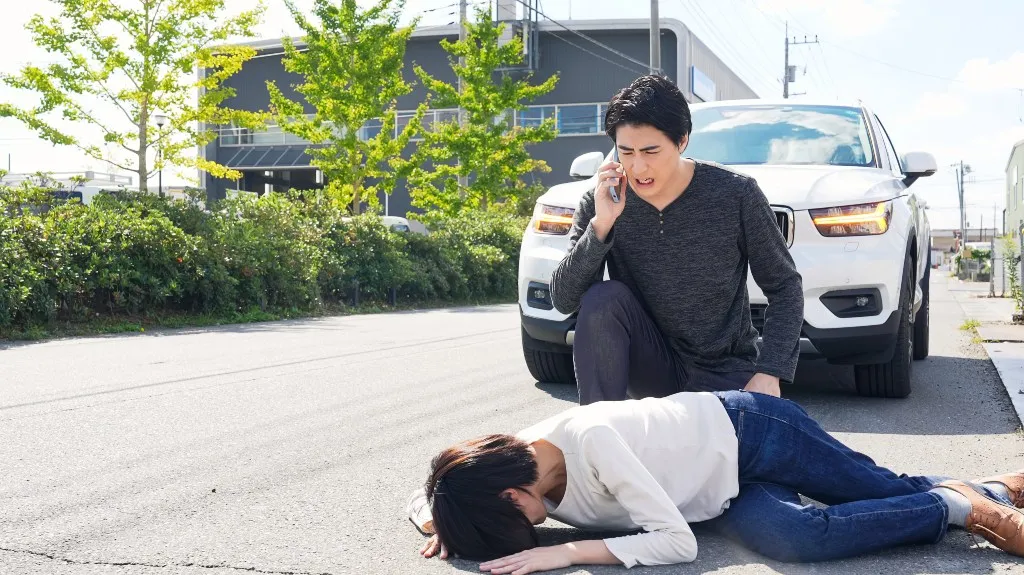
Ohio Pedestrian Accidents: When Drivers Are Automatically at Fault
Ohio does not have a law that makes a driver fully liable for the moment they hit someone on foot. However, some driver behavior comes close to this. When a driver violates a specific safety law and injures a pedestrian, Ohio courts can consider that violation to be negligence in and of itself. Lawyers refer to this as negligence per se, and it can automatically put the blame on the driver.
Failing To Yield in a Crosswalk
This is the clearest example. Under Ohio’s crosswalk right-of-way law, a driver must yield the right of way to a pedestrian legally crossing within a crosswalk, slowing or stopping if needed. The crosswalk doesn’t have to be painted. Ohio also recognizes unmarked crosswalks at most intersections.
If a driver plows through a crosswalk and hits someone who had the right of way, that driver has violated a safety law. This violation is strong evidence of fault.
Passing a Car That Stopped for a Pedestrian
The same statute prohibits a second dangerous maneuver. When one vehicle stops at a crossing to let someone cross, the driver behind it cannot pass that stopped vehicle. Drivers who whip around a stopped car and hit a pedestrian are often found to be fully at fault, because the law has told them to stop.
Hitting a Pedestrian Who Was Not in the Road at All
Some accidents leave little room for debate:
- A driver who drifts into a sidewalk and strikes a pedestrian
- A driver backing out of a parking space or driveway without looking
- A driver running a red light or stopping sign and hitting someone who is legally crossing the road
In these cases, the pedestrian did nothing wrong, and the fault lies with the driver.
When Impairment or Distraction Is Involved
A driver who is drunk, high or texting puts extra weight on themselves. Driving while under the influence is against Ohio’s OVI law. Combine that with a pedestrian having the right of way and the fault becomes very one-sided. In 2026, Ohio courts will be more willing to treat regular phone use while driving as reckless behavior rather than simple carelessness. This could lead to additional penalties on top of other losses.
“Automatic” Fault Is Not the Same As Automatic Money

Here is the part where insurers will not volunteer. Even when a driver clearly breaks the law, Ohio’s comparative fault rule still applies. Under Ohio’s contributory fault statute, your recovery is reduced by your share of the blame. If you are found to be 51% or more at fault, you will recover nothing.
So, insurance companies try to avoid paying out by blaming pedestrians. They will say that you:
- Stepped off the curb into traffic suddenly
- Crossed against a “Don’t Walk” signal
- Were walking outside a crosswalk, when the law requires pedestrians to yield
Even a small shift in that percentage can reduce the settlement by tens of thousands of dollars. That is why these cases depend on evidence. Traffic camera footage, signal timing data, witness statements, and phone records often determine who was really to blame.
Move Fast, Then Call a Lawyer
Evidence in pedestrian cases disappears quickly, surveillance video gets recorded, witnesses forget, and you generally have two years from the injury to file under Ohio’s statute of limitations.
If a driver hits you or someone you love while you are walking in Ohio, don’t let their insurance company decide how much blame is yours. The lawyers at Kitrick, Lewis & Staley-Sladek Co., L.P.A. have spent decades making negligent drivers pay in Columbus and throughout Ohio. Contact us today for a consultation and let us build a case before the evidence disappears.
