
Brain Injury Attorneys Columbus OH

According to the Centers for Disease Control and Prevention, approximately 190 American people died from TBI-related injuries every day in 2021. In addition, thousands more survived with injuries that affected their ability to think, work, and lead a normal life.
Like spinal cord injuries, brain injuries, head injuries, concussions and traumatic brain injuries fall into two broad categories: traumatic or non-traumatic. Knowing which one you’re dealing with shapes both your medical care and your legal options.
Read More Testimonials from Our Clients
Traumatic vs. Non-Traumatic Brain Injuries
A non-traumatic brain injury is caused by something happening inside the body. Strokes, tumors, infections, and oxygen loss are common examples.
A traumatic brain injury (TBI) is different. It’s caused by an outside force, such as a blow, jolt, or impact to the head. That’s the type of injury our firm focuses on.
Accidents That Commonly Cause TBIs
We focus on injuries caused by trauma from:
- Auto and trucking accidents: Even a crash at a moderate speed can cause the brain to slam against the inside of the skull.
- Slips and falls: These can happen on wet floors, icy walkways, or poorly lit stairs.
- Trips and falls: Over uneven pavement, loose cords, or broken steps.
- Sports-related injuries: These can involve coaches, leagues, or equipment manufacturers.
How Traumatic Brain Injuries Are Treated
Treatment for traumatic injuries typically happens in two phases.
Emergency Care and Surgery
The first priority is emergency care or surgery to repair immediate damage. This may involve relieving pressure on the brain, stopping bleeding, or stabilizing a patient in intensive care.
Long-Term Therapy and Medication
After the emergency passes, long-term physical therapy or medication helps limit or recover from the resulting neurological or brain impairments. For many survivors, this phase lasts for months or years.
Access to the Right Doctors
Our firm keeps up with the most advanced thinking and treatment around the world. We have connections and experience in finding and dealing with the best doctors for all such claims. We do our best to ensure that our clients or victims are fairly compensated.
Symptoms of Traumatic Brain Injury
While a person might show signs of TBI immediately after an event, the first signs may not appear until days or even weeks later. Some symptoms of brain injury include the following:
Physical Symptoms
- Dizziness or headaches
- Fatigue
- Nausea
- Numbness
- Paralysis
- Seizures (a medical emergency every time)
Cognitive, Sensory, and Emotional Changes
- Sensory or perceptual changes, like blurred vision or ringing in the ears
- Speech and language changes
- Physical, social, or emotional changes. Family members often notice these before the injured person does.
Why delayed symptoms matter
Insurance companies look for gaps in the timeline between an accident and a diagnosis. If you have hit your head, it is important to get checked out promptly and tell your doctor about any new symptoms, even if they seem minor.
The Brain Injury Treatment Continuum
An individual’s treatment plan will depend on the nature of the brain injury. While warning that very little is known about brain injury, the Brain Injury Association of America (BIAA) supports a “Treatment Continuum.” Its rehabilitation guidelines describe several settings a person may go through:
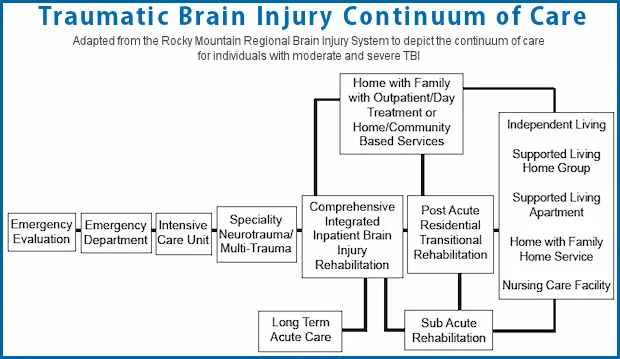
Image Source: Brain Injury Association of America
- Acute rehabilitation in a trauma hospital or inpatient rehab unit
- Post-acute rehabilitation at a transitional or residential facility, which BIAA describes as intensive, full-day therapy
- Sub-acute rehabilitation for patients who need a slower pace over a longer period
- Day treatment, where the person returns home each night
- Outpatient therapy to maintain and build on progress
Recovery doesn’t always move in a straight line. Some people step back to an earlier stage. Your claim should take that into account.
TBI Prognosis
Some people are able to recover completely or near-completely from a TBI. Many others experience long-term or possibly permanent changes, which can significantly affect their lives and the lives of their families.
Tests Doctors Use to Evaluate a Brain Injury
Doctors and medical experts can use various methods to determine a person’s prognosis, including neuropsychological testing and radiological imaging such as:
- Computed Tomography (CT) scans, usually the first scan in the ER
- Diffusion Tensor Imaging (DTI)
- Functional MRI (fMRI)
- Magnetic Resonance Imaging (MRI)
- Positron Emission Tomography (PET) scans
- Single Photon Emission Computed Tomography (SPECT)
A mild TBI often doesn’t show up on a standard CT scan. This is where advanced imaging and neuropsychological testing becomes important evidence. Defense experts sometimes challenge newer methods, like DTI. So, the choice of medical expert is important. BIAA’s overview of common medical tests for brain injury explains more.
Brain Injury Compensation
TBI victims may receive assistance from disability insurance, health insurance, Social Security disability or Workers’ Compensation programs. Those programs rarely cover all the costs of a serious brain injury.
Damages Our Columbus Brain Injury Attorneys Pursue
Our attorneys can help recover damages for:
- Continuing nursing care
- Loss of work, including future earning capacity
- Medication costs
- Sacrifices of family members, such as a spouse who leaves a job to become a caregiver
- Treatment and rehabilitation expenses
- Pain, suffering, and loss of enjoyment of life
Ohio’s Damages Cap and the Catastrophic Injury Exception
Ohio limits noneconomic damages, like pain and suffering, in most injury cases under R.C. 2315.18. However, the cap doesn’t apply to certain catastrophic injuries. One exception is for permanent physical functional injuries that leave a person unable to care for themselves independently. Severe TBI can qualify for this exception.
If You Were Hurt on the Job
Workers’ compensation is usually your only remedy against your employer under R.C. 4123.74. However, if someone else causes an injury, such as another driver hitting your work truck, you may also have a separate claim against that person.
Ohio Deadlines and Fault Rules
The Two-Year Statute of Limitations
Most Ohio injury lawsuits must be filed within two years under R.C. 2305.10. Families filing a wrongful death claim generally have two years from the date of death under R.C. 2125.02.
Extra Time for Children and Some Survivors
Under R.C. 2305.16, the clock can be paused for minors and people of “unsound mind”. Ohio courts read this exception narrowly. Do not rely on it without consulting a lawyer.
Why Injured Ohioans Choose Kitrick, Lewis & Staley-Sladek
Mark Kitrick founded the firm in 1986 to help people injured or killed through someone else’s negligence or misconduct. Mark Lewis joined in 1997. Today, our four attorneys bring a combined 96 years of personal injury experience.
We focus on serious personal injury, wrongful death, product liability, and malpractice cases. We have been recognized by Best Lawyers in America and Super Lawyers. Brain injury cases require that depth.
Explore Our Latest Podcast Episodes
Talk to a Columbus Brain Injury Attorney
A brain injury claim must take into account the care you will need years from now, not just the bills you have today. Our attorneys work with medical experts to document the full picture and fight for compensation that reflects this. Contact us to schedule a free consultation.
Common Brain Injuries FAQs
Related Articles
-
Motorcycle Accident Injuries That May Not Be Obvious on the First Day
Ohio’s two-year deadline for filing a motorcycle injury lawsuit begins when the injury occurs, not when you finally realize it. Under O.R.C. 2305.10, bodily injury claims generally accrue on the date of injury. A concussion that does not appear until day four does not get extra time. That’s a problem because many serious motorcycle accidents…
-
Dashcam Footage After a Columbus Crash: Can It Help or Hurt Your Injury Claim?
Most dashcams record in a loop. Unless someone saves the file, a clip showing who ran a red light can be overwritten within days, sometimes even hours. That’s how a lot of important video evidence disappears after an accident in Columbus. When footage survives, it can be the strongest evidence in an injury claim. It…
-
How Columbus Vision Zero Projects Could Affect Pedestrian and Motorcycle Accident Claims
Columbus is currently rebuilding some of its most dangerous intersections, and the timing is important if you or someone you know was injured while walking or riding a motorcycle on one of these streets. The Vision Zero program of the city has already identified which corridors are responsible for a disproportionate number of serious and…