Truck & Semi Accident Attorney Columbus OH
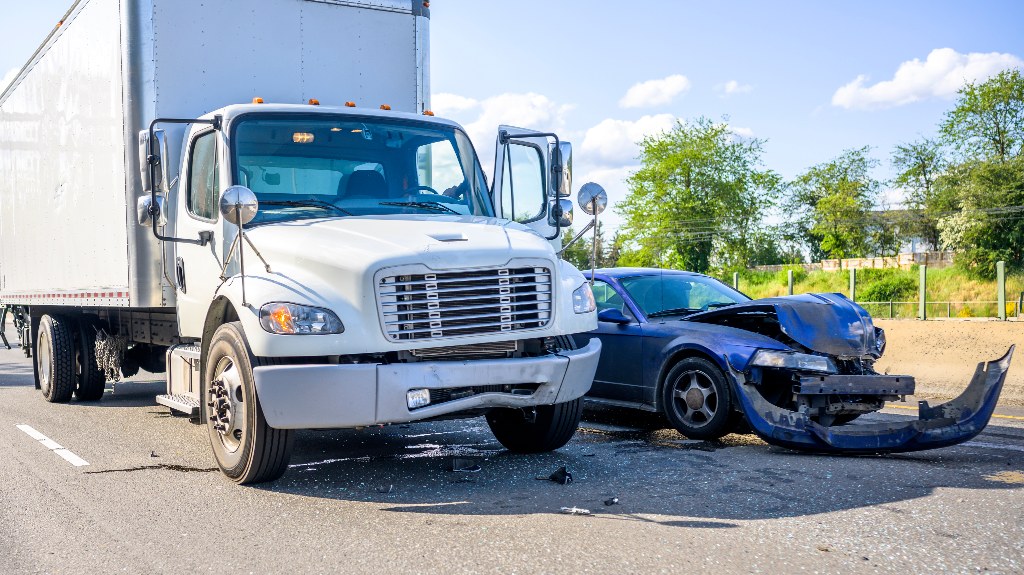
A fully loaded semi-truck can weigh 80,000 pounds, which is roughly 20 times more than a sedan sharing the same lane. When such a large amount of weight and momentum collides with a passenger vehicle, it rarely results in a fair fight. At Kitrick, Lewis & Staley-Sladek Co., L.P.A., our attorneys have defended Ohio truck accident victims and their families for decades. We are aware of how aggressively trucking companies and their insurance companies fight these cases, and we tailor our strategies to match this level of resistance.
Case Studies
Representation Just as Excellent the Second Time Around
High Level of Professionalism is the Hallmark of Successful Litigation
Read More Testimonials from Our Clients
Why Truck Accidents Cause Such Serious Injuries
Size explains part of the danger, but three specific crash types account for most of the worst outcomes on Ohio highways.
- Under-ride and over-ride accidents happen when a passenger vehicle slides underneath or on top of a trailer, often causing the car’s roof to be sheared off.
- Rollover accidents occur when a top-heavy trailer tips over during a sharp turn or sudden lane change, crushing anything underneath it.
- Jackknifing happens when the trailer swings out of the cab. This can block multiple lanes and hit vehicles that have no time to stop.
Vehicle crashes are the leading cause of new spinal cord injuries in the United States, responsible for roughly 38% of cases each year, according to the National Spinal Cord Injury Statistical Center. Motor vehicle crashes also remain one of the leading causes of traumatic brain injury nationwide. Both injuries often lead to months in a hospital or rehabilitation facility, followed by permanent changes in how someone lives, works, and cares for their family.
How Common Are Truck Accidents on Ohio Highways?
More than 3.2 million tractor-trailers share the road with roughly 11 million single-unit trucks nationwide, logging over 330 billion miles a year, according to Federal Motor Carrier Safety Administration data. In 2024 alone, 5,340 people died in large-truck crashes nationwide. Most of them, 70%, were riding in the other vehicle. Columbus sits at the crossroads of I-70, I-71, and I-75, three of the busiest freight corridors in the state.
Those numbers aren’t abstract. They’re the reason trucking companies carry higher insurance limits than ordinary drivers, and the reason their insurers fight so hard to minimize what they pay out.
Sharing the Road Safely With Large Trucks
A few habits meaningfully reduce your risk around commercial trucks.
- Give trucks room to stop. A loaded semi needs far more distance to stop than a car does, so cutting one off can be fatal.
- Stay out of the No-Zones. Trucks have massive blind spots on both sides, directly behind the trailer, and just in front of the cab.
- Pass fully and quickly – linger alongside a trailer, and you’re invisible to the driver.
- Watch for wide turns. Trucks swing wide, sometimes into an adjacent lane, especially at intersections.
- Expect crosswind sway. A tall trailer catches wind like a sail, and can drift or tip in gusty conditions.
- Keep extra distance in wet weather, since blown tires and rear-end collisions spike when following distances shrink.
Federal Regulations Truck Drivers and Carriers Must Follow
CDL Licensing Requirements
Before anyone can legally operate a semi, they need to have a commercial driver’s license according to 49 CFR Part 383. To get one, you must pass skills tests in vehicle maneuvering, backing and parking, as well as hazardous materials handling if applicable. A physical examination and drug test are also required.
Hours-of-Service Limits
Fatigue causes a significant share of truck crashes, so federal law under 49 CFR Part 395 limits how long a driver can stay behind the wheel. The core rules are: 11 hours of driving after 10 consecutive hours off duty, a 14-hour on-duty window that keeps running through loading delays, a mandatory 30-minute break after 8 hours of driving, and a weekly cap of 60 hours in 7 days or 70 hours in 8 days. A 34-hour “reset” is required before that weekly clock resets. Crash investigators pull logbook and electronic logging device data in almost every serious semi-truck crash for exactly this reason. It shows that the driver was and wasn’t allowed to do that day.
Vehicle Maintenance and Inspection
Carriers must inspect brakes, tires, and lights on a regular basis. A blown tire or a failed brake line often traces back to a missed inspection, and this failure can become strong evidence of negligence when uncovered.
What We Investigate After a Semi Truck Crash
We build these cases in the same way a prosecutor would build a criminal case: methodically and starting immediately.
- Whether the driver’s CDL was valid or already suspended at the time of the crash
- Criminal history and prior citations, sometimes going back years
- The number of previous wrecks tied to that driver or that carrier
- Financial records – a carrier under financial strain sometimes cuts corners on maintenance or hiring
- Training records and supervision history
- Drug and alcohol screening results, both pre-employment and post-crash
- Whether the cargo load exceeded legal weight limits (overloaded trailers behave very differently under hard braking)
- Maintenance logs for the tractor and trailer
- Hours-of-service compliance, cross-checked against GPS and toll records
- Cell phone records and in-cab camera footage, where available
Building Your Case: Evidence That Matters
What you do in the hours and days after a crash can shape the entire case.
Immediately After the Crash
- Call the police. Provide them with a detailed report of the accident, including any insurance information and any citations that may have been issued at the scene.
- Take photographs of everything relevant: the trucks involved, skid marks, damaged signs, and the point of impact from multiple angles. Also, record what you can remember about the incident, including any statements made by the driver. An admission such as “I didn’t see you” may be important months later.
- Gather the names and contact information of any witnesses, as police reports often omit people who leave before the officers arrive.
- Check for nearby surveillance cameras, as businesses, schools, and traffic cameras may have captured footage of the crash.
In the Days That Follow
- Return to the scene or send someone to measure skid marks and take photos of anything that has been cleared away since.
- Preserve your vehicle instead of repairing or scraping it right away.
- Avoid giving a recorded statement to the trucking company’s insurer before speaking with an attorney.
Ohio Legal Deadlines and Rules That Affect Your Claim
Ohio gives injury victims two years to file a claim under Ohio Rev. Code Section 2305.10, starting from the date of the accident. Wrongful death claims have the same two-year time limit under R.C. Section 2125.02, starting from the death date instead of the accident date. If you miss either deadline, the claim is lost. There is no exception for the strength of evidence.
Ohio also follows a modified comparative negligence rule under R.C. Section 2315.33. You can still recover damages if you are found 50% or less at fault, but your award is reduced by your percentage of fault. If you are over 51%, you recover nothing. Trucking insurers know this well, which is why they often try to shift blame onto the other driver early on in a claim.
Explore Our Latest Podcast Episodes
About Kitrick, Lewis & Staley-Sladek Co., L.P.A.
Mark Kitrick founded the firm in 1986, after five years as a senior litigator for a larger injury law firm. His goal was simple: to help people who had been hurt by someone else’s negligence obtain real representation, rather than a rushed settlement. Mark Lewis joined the firm in 1997.
Best Lawyers in America and Super Lawyers both recognize the firm’s work over the years. We handle serious personal injury, wrongful death, defective products, and malpractice claims exclusively, without any volume caseload or rotating cast of associates.
If a semi, box truck or delivery van crashes and leaves you or someone you love seriously injured, the clock is already running on your claim and so is the trucking company’s investigation. Contact us today to schedule a consultation.
Common Truck & Semi Accidents FAQs
Related Articles
-
How Columbus Vision Zero Projects Could Affect Pedestrian and Motorcycle Accident Claims
Columbus is currently rebuilding some of its most dangerous intersections, and the timing is important if you or someone you know was injured while walking or riding a motorcycle on one of these streets. The Vision Zero program of the city has already identified which corridors are responsible for a disproportionate number of serious and…
-
How Emotional Distress and Physical Injuries Can Work Together in a Personal Injury Claim
A driver ran a red light on High Street and clipped your bumper. No broken bones, no ambulance ride, but you flinch every time you approach that intersection for months afterward. Under Ohio law, this fear alone is usually not a case. Add a fractured wrist from the same accident, and the fear becomes evidence…
-
Ohio Pedestrian Accidents: When Drivers Are Automatically at Fault
Ohio does not have a law that makes a driver fully liable for the moment they hit someone on foot. However, some driver behavior comes close to this. When a driver violates a specific safety law and injures a pedestrian, Ohio courts can consider that violation to be negligence in and of itself. Lawyers refer…